Authors > Christopher Dickey >
Author Revealed

Christopher Dickey
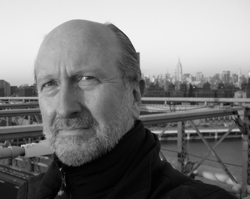
Courtesy of the author

Christopher Dickey

Christopher Dickey, Newsweek's award-winning Paris bureau chief and Middle East editor, reports regularly from Baghdad, Cairo, and Jerusalem, and writes the weekly "Shadowland" column -- an inside look at the world of spies and soldiers, guerrillas... Read full bio

Author Revealed:
Q. What is your motto or maxim?
A. Literature is news that stays news.
Learn more about Christopher Dickey
Christopher Dickey Revealed
About Christopher Dickey
  • What is your birthdate?:
    8/31
  • Previous occupations:
    Documentary film maker.
  • Favorite job:
    Paris Bureau Chief and Middle East Regional Editor for Newsweek -- my current job.
  • High school and/or college:
    Public high schools in Los Angeles and in Leesburg, Virginia, then the University of Virginia and Boston University.
  • Name of your favorite composer or music artist?:
    Mozart
  • Favorite movie:
    I'm going through a Frank Capra phase at the moment.
  • Favorite television show:
    60 Minutes
Revealing Questions
Q. How would you describe your life in only 8 words?
A. A chronicle of war, an exploration of family.
Q. What is your motto or maxim?
A. Literature is news that stays news.
Q. How would you describe perfect happiness?
A. That sense of security and belonging implied by the word "home."
Q. What’s your greatest fear?
A. To warn of disaster and to be ignored.
Q. If you could be anywhere in the world right now, where would you choose to be?
A. Walking through Central Park
Q. With whom in history do you most identify?
A. At the moment, Jacob Riis
Q. Which living person do you most admire?
A. Joan Didion
Q. What are your most overused words or phrases?
A. "it seems"
Q. What do you regret most?
A. Time away from family.
Q. If you could acquire any talent, what would it be?
A. Anything musical.
Q. What is your greatest achievement?
A. Six books.
Q. What’s your greatest flaw?
A. Tunnel vision.
Q. What’s your best quality?
A. Listening, when I come out of the tunnel.
Q. If you could be any person or thing, who or what would it be?
A. Who I am.
Q. What trait is most noticeable about you?
A. It seems I look angry a lot of the time, but this is misleading.
Q. Who is your favorite fictional hero?
A. Ed Gentry
Q. Who is your favorite fictional villain?
A. Alden Pyle
Q. If you could meet any historical character, who would it be and what would you say to him or her?
A. I'd like to meet James Jesus Angleton again to tell him his long twilight war would end.
Q. What is your biggest pet peeve?
A. Corked wine.
Q. What is your favorite occupation, when you’re not writing?
A. Watching movies.
Q. What’s your fantasy profession?
A. Producing and directing movies.
Q. What 3 personal qualities are most important to you?
A. Truth, passion and compassion
Q. If you could eat only one thing for the rest of your days, what would it be?
A. Pasta fagioli.
Q. What are your 5 favorite songs?
A. Judging from the most-played on my iTunes list: Shootout at the Candy Shop (Jess Klein); The Fightin' Side of Me (Merle Haggard); Forever and Ever, Amen (Randy Travis); Amazing Grace (Laura Love); Line in the Sand (Lucy Kaplansky)
On Books and Writing
Q. Who are your favorite authors?
A. George Orwell, Graham Greene, Joan Didion, F. Scott Fitzgerald, James Dickey
Q. What are your 5 favorite books of all time?
A. Ones I keep returning to are Orwell's collected essays; Greene's "The Quiet American"; Fitzgerald's "Great Gatsby"; Didion's "Slouching Towards Bethelehem"; my father's collected poems.
Q. Is there a book you love to reread?
A. Orwell's essays.
Q. Do you have one sentence of advice for new writers?
A. Write what you mean, but allow the keyboard to help you discover what that is.
Q. What comment do you hear most often from your readers?
A. How did you live through that?
Q. How did you come to write Securing the City?
A. From the beginning of the so-called "war on terror" it was obvious to the people I respect in the field that invasions and occupations were not going to solve the problem. Terrorists are a special breed of criminal who need to be hunted down selectively and isolated collectively. The vital tools are good human intelligence, effective cooperation and a deep understanding of the communities that produce terrorists. Once you have those elements, there are many different ways to intervene, of which open warfare is the by far the worst option. Because the NYPD shares this view as it seeks to protect the world’s number one target for attack, I wanted to study its operations in depth.